
Who Controls Bitcoin
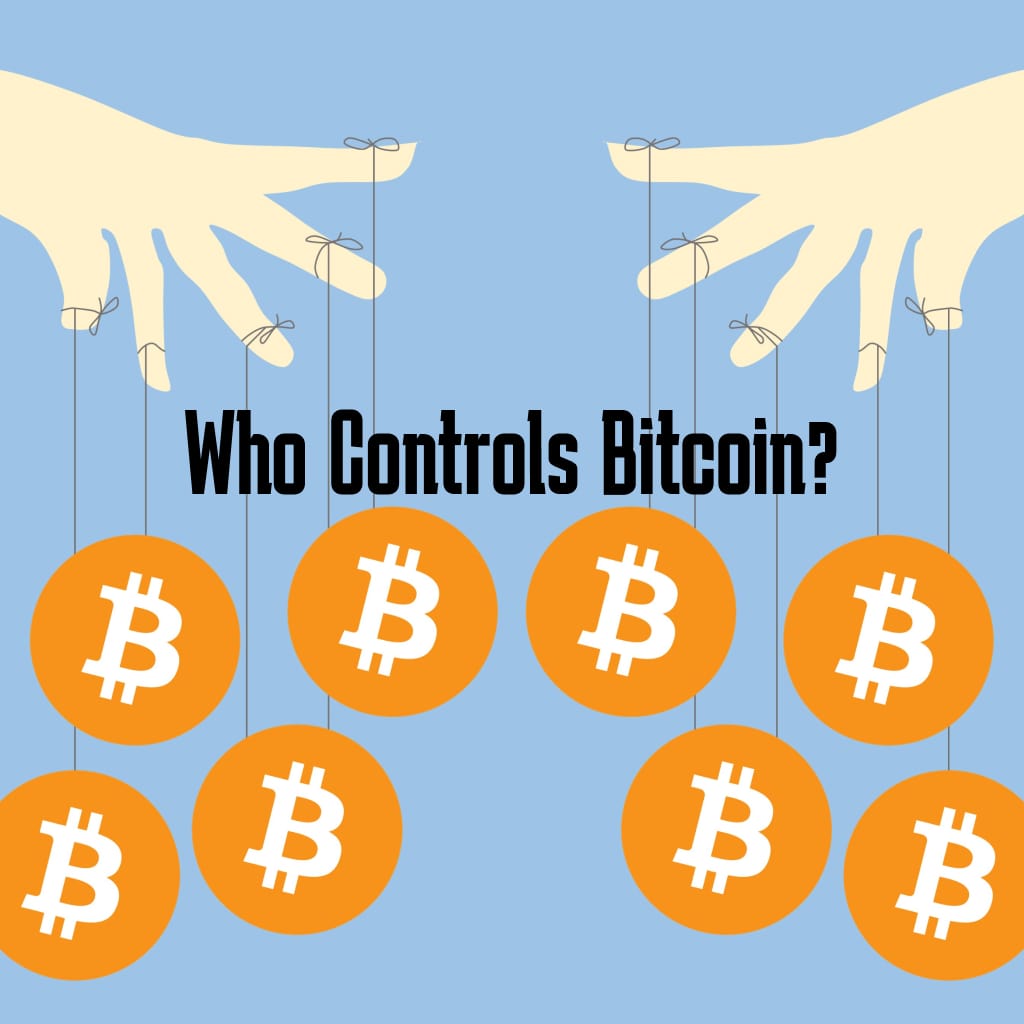
Who Controls Bitcoin? This is a question that may seem simple at first glance, and yet it is quite complex. If you are already familiar with Bitcoin, you may know that it was created by Satoshi Nakamoto in 2009. It is a peer-to-peer electronic money system that operates without any central authority. But today, who maintains and improves its code? Is there just one software for Bitcoin? What are the powers of each actor (miners, developers, nodes, etc.)? We tell you everything you need to know about governance and power within the Bitcoin system in this article.
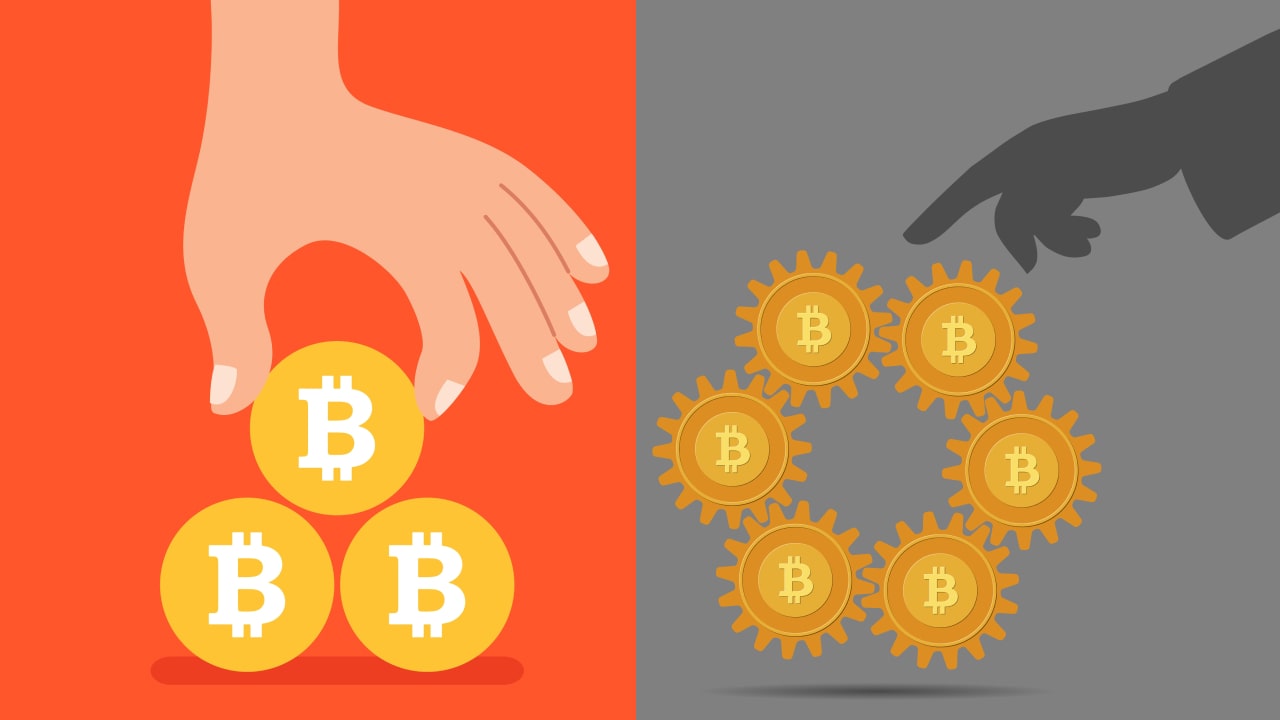
Decentralisation And The Absence Of Central Authority
Bitcoin’s architecture radically differs from traditional financial systems. Bitcoin is decentralized: there is not one single entity who controls Bitcoin. It does not depend on any specific server either. Bitcoins are on a network that does not belong to anyone, and only the consensus of the users can authorize a modification of their protocol. To remain compatible with each other, users, network nodes, miners and developers must use software that conforms to the same rules. They are therefore encouraged to maintain a consensus.
Role Of Developers
Developers are an important part of the ongoing evolution and maintenance of the Bitcoin network. They contribute to the core codebase, develop new features, and address bugs and security issues. Their work is vital for the adaptability and resilience of Bitcoin as they implement enhancements and respond to emerging needs and threats.
While developers do not control Bitcoin, their influence is significant in terms of shaping its technological progression and ensuring the network remains secure and efficient. The decentralized nature of Bitcoin means that no single developer or group has unilateral control over the network; rather, changes are proposed through Bitcoin Improvement Proposals (BIPs) and require consensus from the community before they can be implemented. Network nodes and miners have the most authority in the Bitcoin community.
Role Of Miners
Miners are essential to the operation of Bitcoin’s blockchain. They contribute to network security by confirming transactions and adding them to the blockchain. Bitcoin Mining requires solving complex cryptographic challenges that validate transaction blocks. Once solved, these are added to the blockchain, and the miner is rewarded with newly minted bitcoins.
The role of miners is crucial because they replace the central authority. Their participation in the network is paid by mint bitcoins and by the transaction fees paid by users. However, mining requires a lot of power, and miners have faced criticism for their environmental impact due to their high energy consumption.
Role Of Users
Users are the ones that drive demand and establish Bitcoin Value through their transactions and investments. Users keep the Bitcoin network active by sending and receiving bitcoins, securing their assets in digital wallets, and participating in community governance by expressing their preferences and concerns. They have a say in response to proposed changes in the network.
Users also contribute to the network’s security by holding Bitcoin in their wallets. This helps stabilize the network because there are fewer bitcoins available for trading. Some users also use their voting rights by supporting upgrades that enhance decentralization and resilience against attacks.
The Influence Of Regulatory Bodies
Although Bitcoin itself operates independently of any centralized regulatory authority, the influence of regulatory bodies is felt indirectly. Regulatory bodies in some countries enforce strict rules on crypto exchanges, wallet providers, and other intermediaries in the cryptocurrency ecosystem. They may even outright ban the use of cryptocurrencies. This kind of approach significantly impacts Bitcoin Price and adoption. For example, regulations concerning anti-money laundering (AML), know-your-customer (KYC) procedures, and crypto tax policies influence Bitcoin’s attractiveness to some users.
These regulatory bodies can also impact the Bitcoin price and market growth through stringent regulations that make it difficult for people to access or use Bitcoin. However, if approached positively, regulatory actions are necessary in the financial market and it helps the mainstream adoption of cryptocurrencies in general by making them authorized.
Bitcoin’s Governance Model
To truly understand What is Bitcoin, it is essential to understand its governance model first. Bitcoin’s governance is decentralized and democratic, where changes to the system require widespread agreement from its network of users, developers, and miners. This is primarily possible through the Bitcoin Improvement Proposal (BIP) process. Anyone in the Bitcoin community can propose a BIP and ask for enhancements, optimizations, or new features for the Bitcoin protocol. However, for a BIP to be implemented, it must gain broad support from the community, especially from miners and developers.
This model ensures that no single entity can dictate changes to the Bitcoin protocol. It also preserves user trust in the system’s transparency and fairness. While BIPs can sometimes cause contentious debates within the community and affect Bitcoin price in the short term, they also prevent undue influence from any single stakeholder group. Any changes made serve the broad interests of the community rather than a select few.

Who Really Controls Bitcoin?
As we have briefly explained at the beginning of the article, Bitcoin’s control is decentralized, meaning there isn’t a single entity or group that governs this cryptocurrency. But who controls Bitcoin? Is Bitcoin Legal? It is important to find the answer to these questions before jumping in blindly.
Blockchain is managed by a vast network of nodes, each operating independently. These nodes follow consensus rules agreed upon by the community. Control is effectively exerted by the collective actions of these nodes. Changes to these rules require widespread agreement and are made through the Bitcoin Improvement Proposal (BIP) process. This keeps Bitcoin price free from central authority.

The Influence Of Bitcoin
Since its creation, Bitcoin has significantly impacted financial markets worldwide and spurred the development of other digital currencies. The introduction of Bitcoin challenged traditional monetary systems and introduced a new era of digital finance.
The decentralized nature of Bitcoin offers a high degree of privacy for its users and freedom from government control. Bitcoin value has significantly raised since 2009 and made billionaires who are called “whales”. Thanks to its advantages over traditional methods, a broad spectrum of users from around the world have already adopted the use of Bitcoin in their daily lives. Many centralized and decentralized crypto exchange networks have also been created in the process.
Bitcoin has also largely influenced the iGaming sector as well, mainly by introducing a new payment system that enhances the speed, anonymity, and security of financial transactions. But it also caused the creation of crypto casinos that work entirely with crypto payments and offer provably fair technology in their games.
FAQ
-
Can governments influence Bitcoin?
While Bitcoin itself is designed to operate independently of central oversight, governments can influence its use through regulations. These regulations are usually applied to exchanges, wallet providers, and crypto holders. Governments may ask for taxes over crypto earnings and may restrict some users due to anti-money laundering policies. Although direct control over the Bitcoin network is not possible, these policies affect the adoption rates and practical usability of Bitcoin in certain jurisdictions.
-
How is Bitcoin kept decentralized?
Bitcoin maintains its decentralization through several mechanisms. Primarily, the network is supported by numerous independent nodes that validate transactions and blocks according to strict cryptographic rules. The open-source nature of Bitcoin’s software means that any changes must be publicly reviewed and accepted by a majority of the network’s participants. Mining remains decentralized through rewards distributed to miners around the globe. This broad distribution of nodes and miners helps protect the network from control by any single entity.
-
What makes Bitcoin unique?
Bitcoin is unique due to several key factors. First of all, it operates on a decentralized network, meaning no single entity controls it. Bitcoin transactions are secured in the blockchain. This ensures the anonymity and the security of the user funds. Another unique feature of Bitcoin is that it has a capped supply of 21 million coins earning it the nickname “digital gold”.
-
Is Bitcoin legal?
The legality of Bitcoin varies by country. In many parts of Europe, Bitcoin is legal and regulated to various extents. In some countries, it is embraced as a form of payment and investment, while others have banned or restricted its use due to concerns over security and its potential for illicit use. We advise you to check your local laws regarding cryptocurrency to understand the specific regulations that apply in your region.
-
How are Bitcoin transactions secured?
Bitcoin transactions are secured using a combination of cryptographic techniques like digital signatures and hash functions. Each transaction is broadcast to the network and included in the blockchain only after being validated by miners through a process called mining. This process involves solving complex cryptographic puzzles that confirm transactions and secure them against fraud.
-
What are the risks of investing in Bitcoin?
Investing in Bitcoin carries several risks and it is important to be aware of them before getting started. Bitcoin prices may be highly volatile. This can lead to significant gains or losses in a short period. As regulations are still evolving, there is a risk that future laws could affect the value of Bitcoin or its use. If you are a novice, your Bitcoin wallet might be vulnerable to hacking. Bitcoin transactions are irreversible, which means that any theft is likely not recoverable.