
Countries Where Bitcoin Is Not Allowed or Allowed
The legal status of Bitcoin (BTC) and other cryptocurrencies and the regulations regarding them vary considerably by country and continent. While some countries have explicitly allowed the use and trading of crypto, other countries have restricted or even banned crypto. Some countries haven’t yet enforced a Crypto Regulation so using cryptocurrencies is still a grey area. In this article, you can read where crypto is or is not currently allowed.
Overview of Crypto Regulation
Crypto regulation is globally evolving as governments and regulatory bodies strive to address the complexities introduced by digital currencies. Regulations are necessary to address issues such as consumer protection, market integrity, and preventing financial crimes. In the U.S., for example, crypto regulation involves both state and federal oversight. Is Cryptocurrency Legal in the U.S.? Yes, but various agencies play roles in managing the digital assets in the country. The U.S. government has enacted legislation such as the Infrastructure Investment and Jobs Act. This legislation requires users to report significant cryptocurrency transactions to the IRS.
Alongside the U.S., many countries have established or are developing crypto regulation frameworks. In the UK, crypto companies must register with the Financial Conduct Authority and adhere to its rules. The UK government is also actively working to integrate stablecoins as a recognized form of payment.
Why Some Countries Ban Bitcoin?
Some countries ban Bitcoin and other cryptocurrencies due to concerns over financial security and the potential for misuse in illegal activities. Cryptocurrencies can be highly volatile and pose risks of financial losses for inexperienced users. This led governments to restrict their use to protect consumers. Additionally, the anonymous nature of transactions can make cryptocurrencies attractive for illegal activities such as money laundering and funding terrorism. By banning cryptocurrencies, these governments aim to maintain control over the financial system and prevent potential risks associated with unregulated monetary flows.
Countries Where It Is Illegal to Use Bitcoin
While many countries have embraced the potential of Bitcoin and other cryptocurrencies, some have imposed outright bans due to various concerns. Here’s a detailed look at why certain countries have banned Bitcoin:
- Algeria – In Algeria, the use of Bitcoin and other digital assets was made illegal in 2018. The Algerian government’s prohibition focuses on the prevention of financial crimes and the control of monetary flows within the country’s regulated financial system.
- Bolivia – Since 2014, Bolivia has banned Bitcoin and other unregulated digital currencies. The Bolivian Central Bank instituted the ban to prevent potential financial instability and risks associated with unregulated currencies.
- Bangladesh – Bangladesh has been stringent in its stance against Bitcoin since 2017. The Bangladeshi government has banned cryptocurrency transactions under its strict anti-money laundering and anti-terrorism financing laws. Engaging in Bitcoin transactions can lead to severe legal penalties, including imprisonment.
- Dominican Republic – In the Dominican Republic, cryptocurrencies are not recognized as legal currency. The ban is enforced by the Dominican Central Bank, which prohibits the use of digital currencies due to concerns about financial security and the integrity of the country’s existing monetary system.
- Ghana – As of now, cryptocurrencies remain illegal in Ghana, although the Central Bank of Ghana recognizes the potential of blockchain technology. The bank’s main concerns involve the high risks associated with cryptocurrencies, which they believe could undermine the nation’s financial system.
- Nepal – Nepal has enforced a ban on Bitcoin since 2017. The Nepal Rastra Bank declared cryptocurrencies illegal due to concerns about their use for illegal activities such as money laundering and fraud. The central bank’s decision reflects a stringent approach to controlling financial practices that could pose risks to its economic system.
- The Republic of Macedonia – North Macedonia is the only European country where cryptocurrencies are officially banned. The government’s stance is to prevent potential financial scams and mitigate money laundering risks.
- Qatar – In Qatar, the use of Bitcoin and other cryptocurrencies is banned, primarily due to concerns regarding money laundering and the potential for financing terrorism.
- Vanuatu – Although there were rumors that Vanuatu accepted Bitcoin for its citizenship by investment program, the government has confirmed these to be false. The official stance is that the country does not recognize cryptocurrencies as legal tender and transactions are required to be conducted in recognized currencies like the US Dollar.
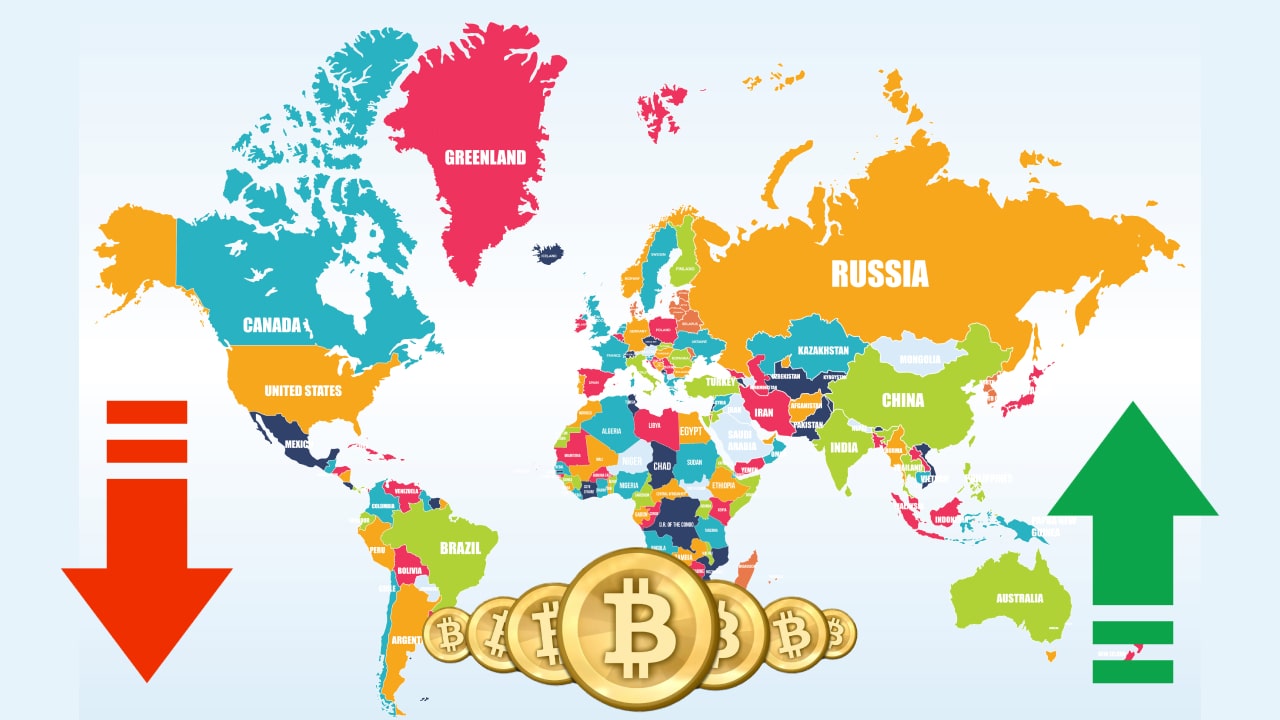
Countries Where Bitcoin Usage Faces Legal Limits
In several Countries With Digital Currency, the use of cryptocurrencies is subject to legal restrictions. The crypto regulation in these countries limits the use of cryptocurrencies as a form of payment and in financial institutions, though ownership and trading may still be permissible.
- Bahrain – Bahrain does not outright ban the ownership or trading of Bitcoin but has implemented strict regulatory measures. The country’s central bank requires all crypto-related activities to be licensed and adhere to rigorous anti-money laundering (AML) standards.
- China – China has one of the strictest stances on cryptocurrencies. It has banned all forms of cryptocurrency transactions and any financial institutions from dealing with or facilitating the trade of digital assets. Despite these restrictions, individuals in China continue to engage in cryptocurrency transactions using overseas accounts and exchanges.
- Hong Kong – Hong Kong’s crypto regulation is somewhat restrictive, particularly concerning the use of Bitcoin as a payment method. The region allows trading and investing in cryptocurrencies but has placed a ban on their use as a legal tender or payment tool.
- Iran – In Iran, the use of Bitcoin and other cryptocurrencies as a payment tool inside the country is banned. However, the government recognizes mining as a legitimate industry and issues licenses to mining operations that can sell their mined Bitcoin to the central bank.
- Kazakhstan – Kazakhstan has implemented regulations that govern the mining and trading of cryptocurrencies. The government has even created a framework that encourages cryptocurrency legal mining by offering electrical power subsidies. However, they maintain a strict stance against Bitcoin transactions or Bitcoin Gambling within the country.
- Russia – Russia allows the ownership of Bitcoin as the government recognizes cryptocurrencies as a type of property. This means they can be bought, sold, and traded. Is Bitcoin legal as a payment method in Russia? Unfortunately, not. Crypto can’t be used to purchase goods or services.
- Saudi Arabia – Saudi Arabia has a strict policy against the use of cryptocurrencies. The Saudi Arabian Monetary Authority has repeatedly warned against trading Bitcoin and stated that cryptocurrencies are not supported by any monetary authority.
- Turkey – Turkey has imposed significant restrictions on the use of Bitcoin and other cryptocurrencies. While not banning their ownership or exchange, the Turkish government has prohibited their use as a form of payment and has also placed restrictions on financial institutions from processing transactions involving digital currencies.
- Vietnam – Vietnam prohibits the use of Bitcoin as a payment tool but allows it to be traded as an asset. The State Bank of Vietnam has declared that cryptocurrencies are not a lawful means of payment within the country, and the use of Bitcoin for payments can attract heavy fines.
Countries Where Bitcoin Holds Legal Status
Cryptocurrencies are recognized as legal in many countries, which is great for Crypto Gambling enthusiasts. In these countries with digital currency, regulations allow the use of cryptocurrencies in transactions, trading, and investment. While these countries may have different levels of crypto regulation, they all share a common acceptance of Bitcoin’s legitimacy.
- Antigua And Barbuda – Antigua and Barbuda have embraced Bitcoin, especially as part of their efforts to boost their digital economy. The government has passed a crypto regulation that allows Bitcoin to be used as payment for government services, showcasing a significant endorsement of cryptocurrency.
- Australia – Australia is known for its progressive stance on cryptocurrency. Bitcoin is considered legal and is treated like an asset for capital gains tax purposes. The country has established a comprehensive crypto regulation system to ensure that cryptocurrency operations are conducted securely and transparently.
- Barbados – Barbados has recognized the potential of cryptocurrencies and has taken steps to integrate Bitcoin into its financial services sector. The country is actively exploring the adoption of cryptocurrencies to enhance its financial landscape and attract crypto-related businesses.
- Belgium – In Belgium, Bitcoin is legal, and cryptocurrencies are not considered legal tender but are recognized as a form of “private money.” The tax authorities treat Bitcoin transactions conducted by occasional transactions of cryptocurrencies as exempt from VAT. To ensure that Bitcoin is not used for money laundering, the Belgian government created strict crypto regulation systems aligned with European Union directives.
- Bulgaria – Bulgaria is one of the countries where Bitcoin holds legal status. However, the Bulgarian government has also made headlines for being one of the first to seize a significant amount of Bitcoin from illegal activities. Now, cryptocurrencies like Bitcoin are recognized under the law and subject to taxation as financial assets.
- Cayman Islands – The Cayman Islands are known for being crypto-friendly and have established themselves as a hub for blockchain and cryptocurrency businesses. The government provides clear crypto regulation systems that encourage the growth of cryptocurrencies.
- Chile – In Chile, Bitcoin and other cryptocurrencies are not recognized as legal tender but are legal to trade and possess. The country has a very active cryptocurrency scene. There is a large number of exchanges in the country and Bitcoin payments are accepted in various sectors.
- Croatia – Croatia allows the use of Bitcoin, treating it as a digital asset rather than a legal tender. While there is no specific crypto regulation in the country, the Croatian National Bank has stated that cryptocurrencies can function as part of payment systems under current regulations.
- Dominica – Dominica has shown interest in cryptocurrencies, participating in initiatives like “Bitcoin Island” and has positive attitudes towards the use of Bitcoin and other digital currencies. The legal status allows for the use and trade of Bitcoin, aligning with efforts to enhance digital financial services within the island nation.
- Estonia – Estonia has a well-defined crypto regulation framework. This includes strict requirements for anti-money laundering (AML) and know-your-customer (KYC) practices. Cryptocurrencies are not considered legal tender but are recognized as digital assets for tax purposes.
- Finland – In Finland, Bitcoin is treated as a commodity, not as a currency or financial security. Bitcoin is taxed by The Finnish Tax Authority if sold at a profit. However, buying goods with Bitcoin is not taxed. According to the crypto regulation, Bitcoin exchanges must register with the Finnish Financial Supervisory Authority and comply with AML regulations.
- Germany – Germany was one of the first countries to recognize Bitcoin as a unit of account. This allowed it to be used legally for tax and trading purposes in the country. Bitcoin is not legal tender but is recognized as “private money” by the German Finance Ministry. This way, Bitcoin can be used in commercial transactions and is subject to tax obligations similar to those applied to traditional financial instruments.
- Indonesia – Indonesia allows the trading of Bitcoin as a commodity and permits cryptocurrency exchanges to operate under regulatory guidelines; however, it prohibits the use of cryptocurrencies as a payment tool. The Indonesian government has implemented a crypto regulation framework to ensure that cryptocurrency trading is conducted in a structured and lawful manner.
- Italy – In Italy, Bitcoin is not considered legal tender but is recognized as a form of virtual currency. The Italian crypto regulation framework does not explicitly regulate Bitcoin; however, activities involving Bitcoin may fall under financial, tax, and anti-money laundering regulations. Cryptocurrencies are subject to capital gains tax as well, and operations must adhere to financial regulations concerning security and reporting if deemed financial instruments.
- Ireland – In Ireland, Bitcoin and other cryptocurrencies are not considered legal tender but are recognized under regulatory frameworks. Cryptocurrency exchanges and service providers are required to register with the Central Bank of Ireland and adhere to anti-money laundering (AML) guidelines.
- Japan – Japan is one of the most progressive countries regarding crypto regulation. Bitcoin is recognized as legal property under the Payment Services Act, and cryptocurrency exchanges must register and comply with financial regulations.
- Malta – Malta is already known for its positive approach to online gambling. The country also positioned itself as a “Blockchain Island”. They have not waited long to create a comprehensive crypto regulation framework for blockchain, cryptocurrencies, and ICOs.
- Mauritius – Mauritius recognizes Bitcoin as a digital asset. It is legal to buy, sell, and hold cryptocurrencies. The country aims to attract cryptocurrency businesses while preventing abuse with crypto regulation.
- Marshall Islands – The Marshall Islands has taken a unique approach by introducing its own digital currency, which serves as legal tender alongside the US dollar. This move is a significant step toward integrating digital currencies into the mainstream financial system of the country.
- New Zealand – In New Zealand, Bitcoin is treated as property rather than currency. This means that it is subject to specific tax obligations, especially concerning capital gains. New Zealand’s regulatory approach ensures that businesses dealing with Bitcoin operate with transparency and in compliance with anti-money laundering laws.
- Norway – Norway recognizes Bitcoin as an asset and imposes capital gains tax on its sale. The country does not treat Bitcoin as legal tender but as a taxable asset, where gains from Bitcoin investments are subject to taxation.
- The Philippines – The Philippines has a progressive approach to Bitcoin, recognizing it as a legitimate payment method. The country’s central bank has issued crypto regulation frameworks that require cryptocurrency exchanges to register and adhere to anti-money laundering laws.
- Serbia – Serbia has recently legalized the use of Bitcoin and other cryptocurrencies. The country allows trading, mining, and other financial activities related to digital currencies. The crypto regulation framework ensures that all operations are in line with the country’s financial laws.
- South Korea – In South Korea, Bitcoin and other cryptocurrencies are legal but regulated. The country has established a licensing system for virtual asset service providers, which includes stringent requirements for operations such as real-name verification and compliance with anti-money laundering standards.
- Sweden – Sweden regards Bitcoin and other digital currencies as legal. Cryptocurrencies are treated as assets, subjected to capital gains tax. Sweden does not recognize cryptocurrencies as legal tender but has a progressive stance towards blockchain and crypto technologies.
- Switzerland – Switzerland is known for its positive and forward-thinking approach to cryptocurrencies and blockchain technology. Bitcoin is legal, and the country has established a crypto regulation that supports the use of digital currencies. Swiss authorities provide clear guidelines that allow for the use of Bitcoin in various financial operations.
- Ukraine – Ukraine has also adopted a legal and regulatory framework for cryptocurrencies. Bitcoin is legal, and the country has been working on further integrating crypto into its economy, including providing protections for investors and encouraging the growth of crypto-related businesses.
- The United Kingdom – In the United Kingdom, Bitcoin is treated as property for tax purposes. It is legal to buy, sell, and use Bitcoin. The UK does not recognize Bitcoin as a legal tender but has a crypto regulation framework that ensures cryptocurrency operations are performed within the boundaries of financial laws.
- The United Arab Emirates – In the United Arab Emirates, Bitcoin and other cryptocurrencies are not recognized as legal tender but are legal to use and trade. The UAE has established a crypto regulation for cryptocurrencies, particularly in Dubai. This was made possible with the introduction of the Virtual Assets Law, which regulates digital assets comprehensively.
- The United States – In the United States, Bitcoin is recognized as a commodity by the Commodity Futures Trading Commission (CFTC) and as property for tax purposes by the IRS. Cryptocurrencies are legal to use, trade, and hold. There are specific state-level regulations as well, such as New York’s BitLicense, which govern the operation of cryptocurrency businesses.
- Uzbekistan – Uzbekistan offers a favourable environment for the development of cryptocurrency and blockchain technology. The country has legalized cryptocurrency trading and mining, provided that entities are registered with the government.
- Venezuela – Venezuela has legalized cryptocurrencies and has even introduced its own cryptocurrency, the Petro. The government promotes the use of Petro for various public services and encourages the use of Bitcoin and other cryptocurrencies amidst hyperinflation and economic sanctions.

Countries Where Bitcoin Is an Authorized Currency
As of 2025, El Salvador remains the only country in the world that has accepted Bitcoin as an authorized currency. President Nayib Bukele owns large amounts of Bitcoin and encourages the use of digital currencies in the country.
El Salvador
El Salvador is the first country globally to adopt Bitcoin as legal tender. This significant move was established by the Bitcoin Law, passed on June 8, 2021. The law allows Bitcoin to be used for any transaction within the country alongside the U.S. dollar.
Countries Where Bitcoin Falls into A Legal Gray Area
The legal status of Bitcoin is still not clearly defined in some countries. Is Bitcoin illegal in these countries? Not entirely. There is a gray area where cryptocurrencies are neither explicitly allowed nor prohibited. This stems from a lack of specific crypto regulation and results in uncertainties about its use, taxation, and legal implications.
- Albania – While Albania has shown interest in creating a regulatory framework for cryptocurrencies to combat money laundering and terrorist financing, as of now, it lacks specific laws regulating the use of Bitcoin. This creates a gray area where individuals and businesses operate without clear guidelines.
- Afghanistan – The legal status of Bitcoin in Afghanistan is uncertain due to the absence of cryptocurrency regulations. Economic instability and the lack of a robust financial infrastructure contribute to the unclear status of digital currencies in the country.
- Angola – Angola does not have specific regulations governing cryptocurrencies, placing Bitcoin in a legal gray area. The lack of clarity on its legal status means that while there is no formal recognition or regulation, there is also no explicit prohibition against its use.
- Anguilla – Bitcoin’s regulation is still in development, and while there are no specific laws that make its use illegal, the lack of clear guidelines means it exists in a regulatory gray area.
- Argentina – While Bitcoin is not recognized as a legal tender, it is widely used due to economic instability and inflation. The country lacks comprehensive regulations, placing Bitcoin in a legal gray area despite its popularity.
- Belize – Bitcoin is neither illegal nor fully regulated in Belize. The absence of explicit regulations results in a legal gray area for Bitcoin users.
- British Virgin Islands – The British Virgin Islands have become a hub for cryptocurrency businesses due to favourable tax laws and lack of stringent regulations, making the legal status of Bitcoin somewhat unregulated but allowed.
- Brunei – In Brunei, there are no specific laws regulating Bitcoin, placing it in a legal gray area. Cryptocurrencies are not widely used or regulated.
- Cambodia – The use of cryptocurrencies like Bitcoin is discouraged by the government, and while not explicitly banned, regulatory actions suggest a cautious and restrictive approach.
- Costa Rica – Bitcoin is not recognized as a legal tender but is used for transactions and investments. The regulatory environment is not fully developed, leading to its classification in a legal gray area.
- Cuba – Cuba has authorized and regulated the use of cryptocurrencies like Bitcoin starting September 15, 2021. The Cuban government’s regulation aims to manage crypto use within commercial transactions and involves licensing providers of crypto services. This marks a significant step given the increasing local adoption amidst economic sanctions that complicate dollar use.
- Guatemala – In Guatemala, cryptocurrency falls into a legal gray area with no specific regulations or prohibitions defined against its use. The country is yet to establish clear guidelines or regulatory frameworks governing cryptocurrencies.
- Haiti – Haiti does not have specific regulations concerning the use of cryptocurrencies like Bitcoin. Given the country’s economic and political challenges, the adoption and regulation of digital currencies remain in a very uncertain state.
- India – Bitcoin is not recognized as legal tender in India, but it is legal to buy, hold, and trade. The crypto regulation in India is evolving, with the government implementing a tax on cryptocurrency gains.
- Honduras – Cryptocurrencies are in a legal gray area in Honduras, with no specific legislation that either authorizes or bans their use. The country shows a cautious approach without clear governmental stance or regulatory framework.
- Kenya – Bitcoin operates in a legal gray area in Kenya. The government and the central bank have warned against the use of cryptocurrencies due to potential risks but have not issued outright bans or provided a regulatory framework.
- Jamaica – In Jamaica, Bitcoin is neither fully regulated nor prohibited. The Bank of Jamaica has issued warnings about the risks associated with cryptocurrency but has not developed specific regulatory guidelines.
- Latvia – Latvia recognizes the use of Bitcoin and cryptocurrencies but has not yet fully established a crypto regulation. As part of the European Union, Latvia may align its policies with broader EU regulations as they develop.
- Lesotho – While there is no specific crypto regulation in Lesotho, the lack of regulatory clarity places it in a legal gray area. There are no explicit restrictions or allowances governing the use of Bitcoin in this country.
- Macau – Bitcoin is not regulated by any specific legislation in Macau. The financial authorities have warned the public about the risks associated with cryptocurrencies but have not provided a crypto regulation framework, which creates uncertainty regarding their legal status.
- Malaysia – In Malaysia, Bitcoin is not recognized as legal tender, but it is legal to trade and hold. The Malaysian authorities regulate the exchange of cryptocurrencies like Bitcoin under anti-money laundering laws but do not permit their use as payment for goods and services.
- Mexico – Bitcoin exists in a somewhat regulated environment in Mexico. Cryptocurrencies are recognized as property under Mexican law, and their use in the financial system is governed by specific fintech laws. However, they are not accepted as legal tender.
- Moldova – The legal status of Bitcoin in Moldova is not explicitly defined, which places it in a legal gray area. The government has shown some interest in blockchain technology, but there are no specific crypto regulation governing the digital assets yet.
- Montenegro – Montenegro does not have a specific crypto regulation governing the use of Bitcoin and cryptocurrencies. This lack of crypto regulation places Bitcoin in a legal gray area where it is neither officially sanctioned nor expressly prohibited.
- Pakistan – The legal status of Bitcoin in Pakistan is ambiguous. Cryptocurrency trading and ICOs have faced bans and restrictions by the State Bank of Pakistan, aiming to prevent money laundering and fraud. However, despite regulatory warnings, there is a significant interest and market for Bitcoin among the public.
- Tajikistan – Tajikistan has not officially regulated or explicitly banned the use of Bitcoin. The absence of clear crypto regulation means Bitcoin operates in a legal gray area, with residents using it at their own risk without regulatory support.
- Tanzania – The Bank of Tanzania has previously warned against the use of cryptocurrencies, including Bitcoin, due to the lack of a crypto regulation system. However, there is no explicit law banning the use of cryptocurrencies, placing them in a legal gray area.
- Samoa – Samoa has a cautious approach towards Bitcoin and other cryptocurrencies, primarily due to concerns over scams and financial security. While not outright banned, the Central Bank of Samoa has issued warnings to the public and has strict regulations in place for financial institutions regarding cryptocurrencies.
FAQs
What are the reasons behind the banning of Bitcoin in some countries?
Countries ban Bitcoin and other cryptocurrencies for several reasons. These include concerns over the financial stability and control of the monetary system. Some countries also consider crypto as a high-risk asset due to the anonymity of transactions.
How do Bitcoin bans affect the cryptocurrency market globally?
Bitcoin bans lead to significant fluctuations in the global cryptocurrency market. Sudden bans can create panic, leading to increased volatility in Bitcoin prices. Trading volumes may shift causing crypto businesses to relocate to more crypto-friendly countries.
What legal protections exist for Bitcoin investors?
Legal protections for Bitcoin investors vary by country and are generally tied to the regulatory framework in place. Many countries require exchanges to implement security measures, conduct KYC (Know Your Customer) procedures, and register with financial authorities. Investors may have legal recourse in cases of fraud or theft, although this can be complicated by the decentralized nature of cryptocurrencies.
How does Bitcoin's legality affect online transactions?
The legality of Bitcoin significantly impacts online transactions because, in countries where Bitcoin is legal, merchants and service providers are allowed to accept it as a payment method. In these countries, businesses must comply with local laws regarding Bitcoin transactions and fulfill their tax obligations and reporting requirements.